Neoclassical language & authorship
Planned as the focal point of L'Enfant's city, the Capitol broadcasts American neoclassicism—temple fronts, porticoes, and a commanding dome—to link the young republic to Rome. The sequence of architects set that language: William Thornton's 1793 scheme established the central massing; Benjamin Henry Latrobe rebuilt interiors and introduced robust classical detailing; Charles Bulfinch completed the early building with a low copper-clad dome. Mid-century growth brought Thomas U. Walter (with August Schoenborn) to design larger House and Senate wings and the present dome, completed under Edward Clark.
How the dome was made
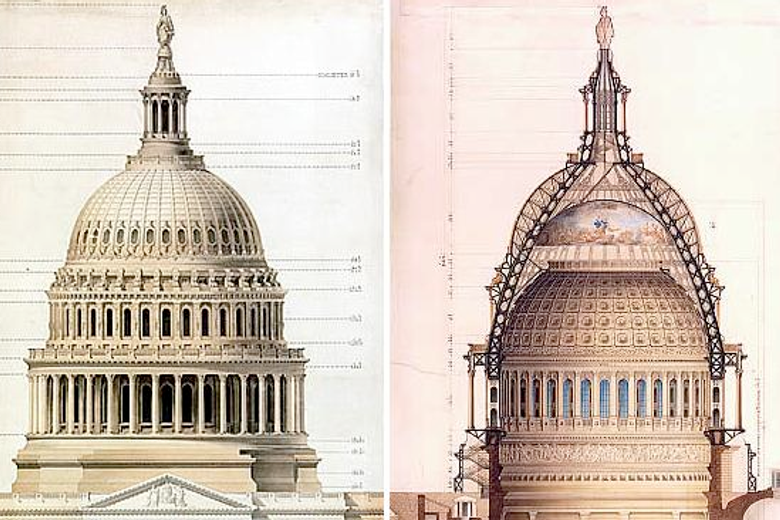
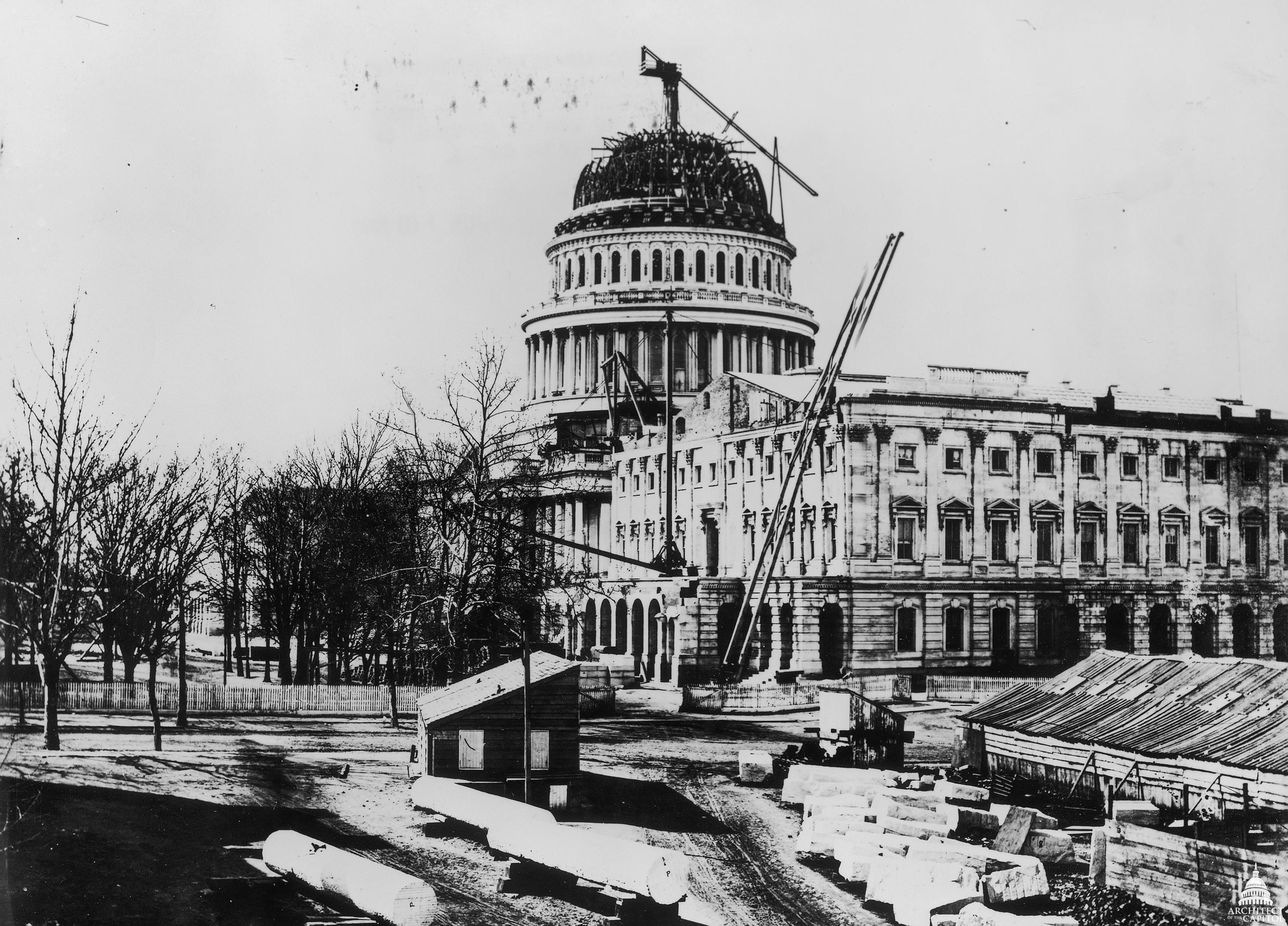
Walter replaced Bulfinch's underscaled dome with a much taller cast-iron, double-shell structure that could sit on the existing masonry drum. Prefabricated iron ribs and rings—fabricated by Janes, Fowler, Kirtland & Co. with a surrounding colonnade by Poole & Hunt—were hoisted by derricks and bolted in place, creating separate inner and outer shells. The inner oculus reveals Constantino Brumidi's Apotheosis of Washington; above, a tholos supports Thomas Crawford's Statue of Freedom (set in 1863). Iron kept weight low enough to avoid rebuilding foundations.
Architectural challenges
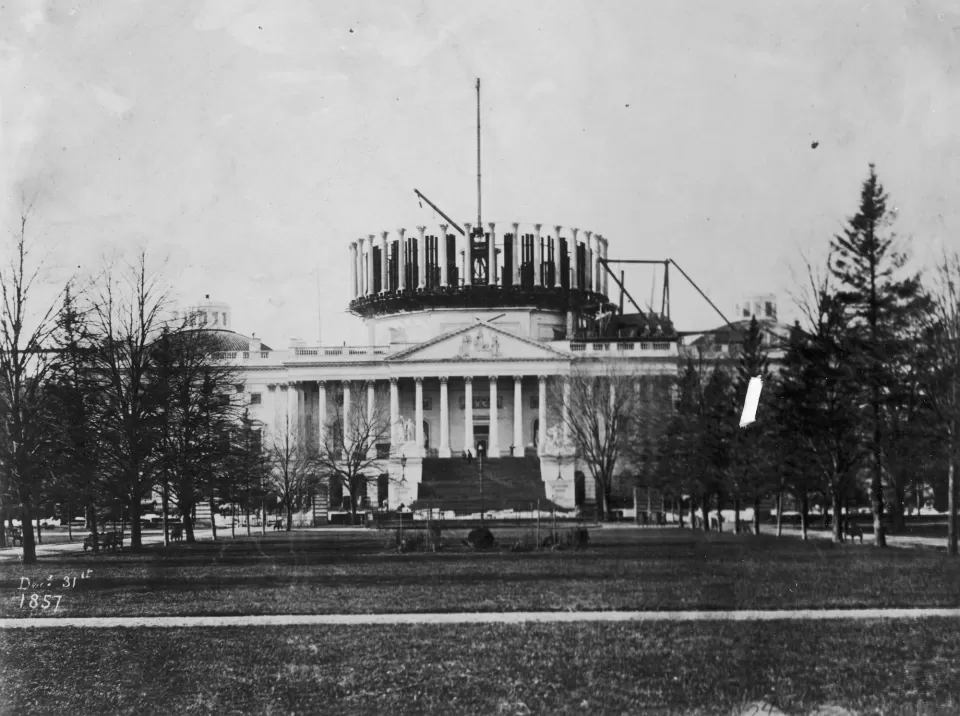
The building endured the 1814 burning, soft Aquia sandstone that weathered poorly, and the 1850s problem of restoring proportion after wing expansions—solved by the lighter, larger iron dome. Later, corrosion, cracking, and water intrusion in the iron shell prompted major conservation, most recently the scaffolding campaign and envelope repairs completed in 2016.
Later alterations & setting
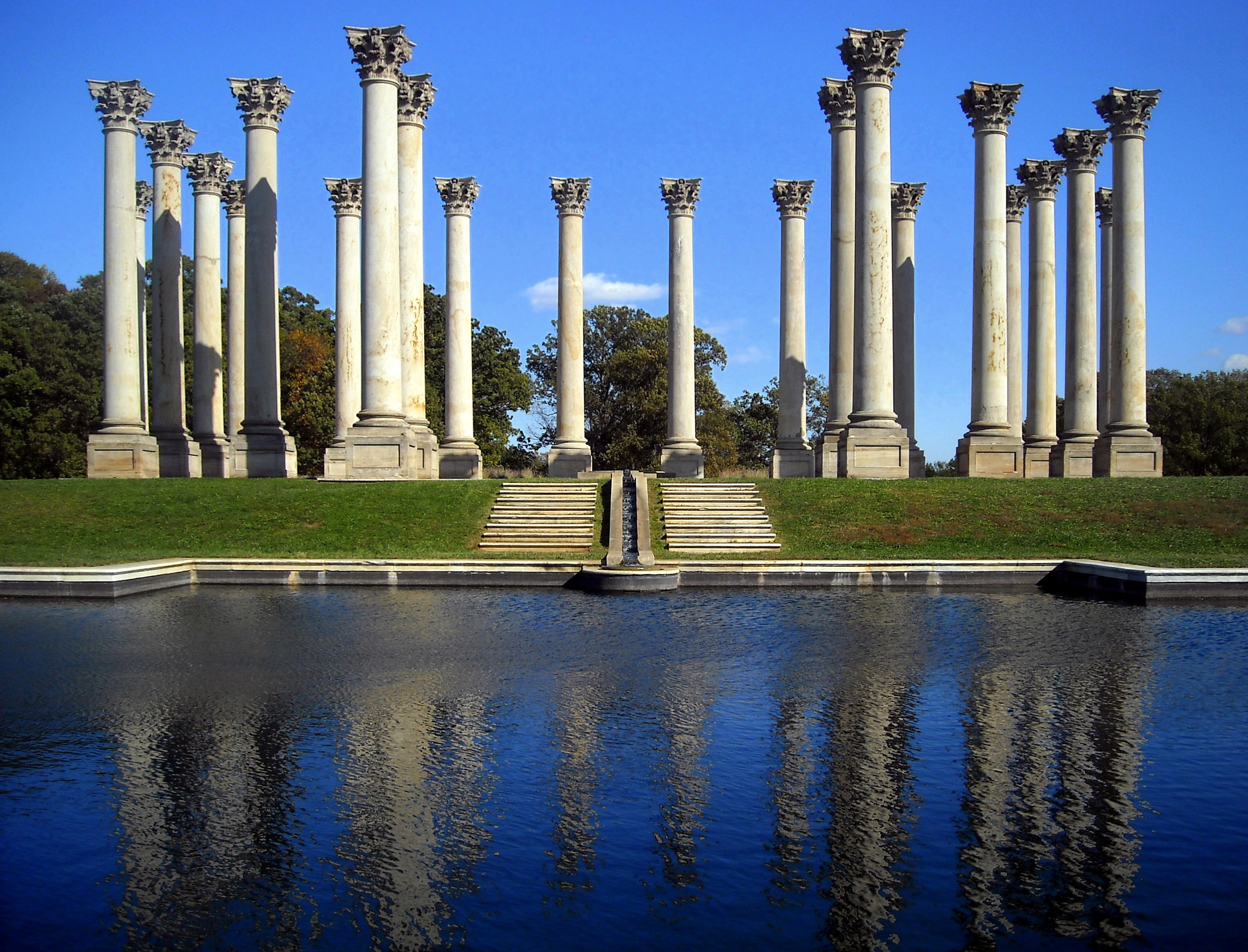
The East Front was extended in 1958–62 in marble, and the original sandstone columns were moved offsite (now the National Capitol Columns at the U.S. National Arboretum). Landscape architect Frederick Law Olmsted (1874–1892) anchored the enlarged mass with broad marble terraces and formal grounds, effectively creating a podium that stabilizes views from the Mall and city streets.