(Source: Wikipedia)
Prior to establishing the nation's capital in Washington, D.C., the United States Congress and its predecessors met at Independence Hall and Congress Hall in Philadelphia, Federal Hall in New York City, and five additional locations. The First Continental Congress brought together delegates from the colonies in Philadelphia, followed by the Second Continental Congress, which met from May 1775 to March 1781.
After adopting the Articles of Confederation in York, Pennsylvania, the Congress of the Confederation was formed and convened in Philadelphia from March 1781 until June 1783, when a mob of angry soldiers converged upon Independence Hall, demanding payment for their service during the American Revolutionary War. Congress requested that John Dickinson, the Governor of Pennsylvania, call up the militia to defend Congress from attacks by the protesters. In what became known as the Pennsylvania Mutiny of 1783, Dickinson sympathized with the protesters and refused to remove them from Philadelphia. As a result, Congress was forced to flee to Princeton, New Jersey, on June 21, 1783, and met in Annapolis, Maryland, and Trenton, New Jersey, before ending up in New York City.
(Source: Library of Congress)
(Source: Wikipedia)
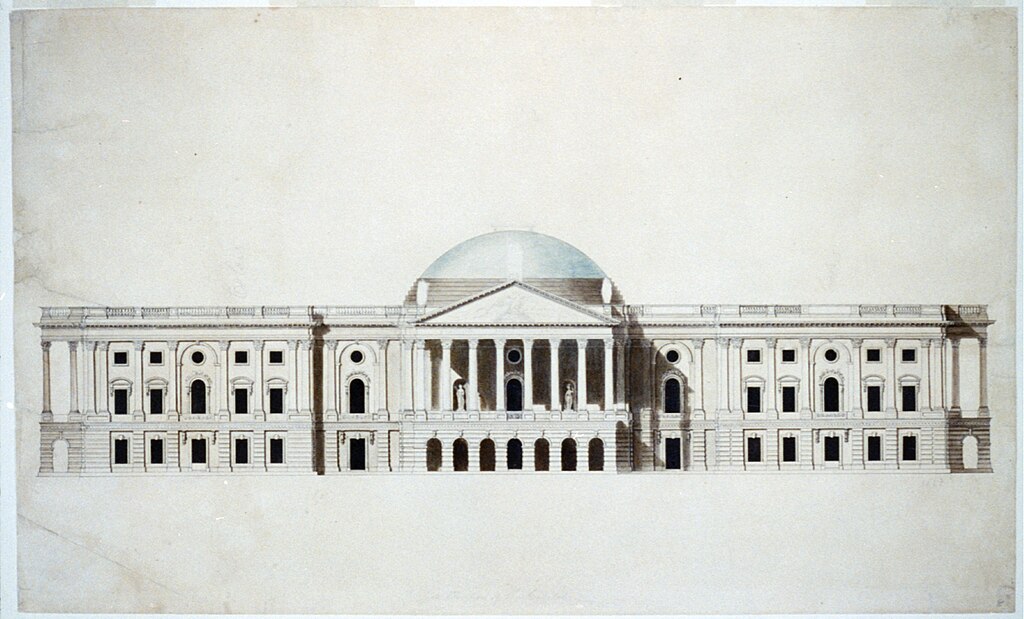
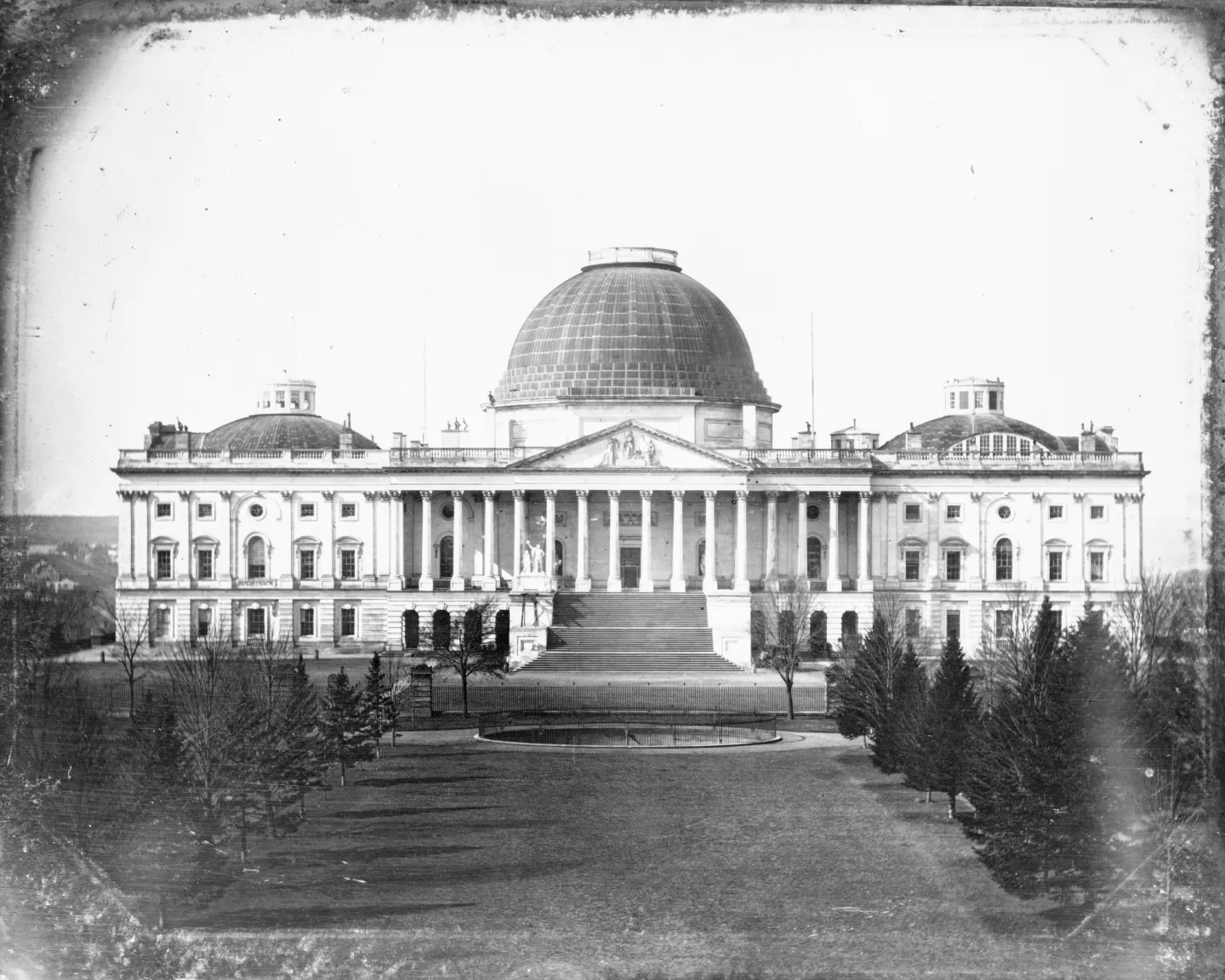
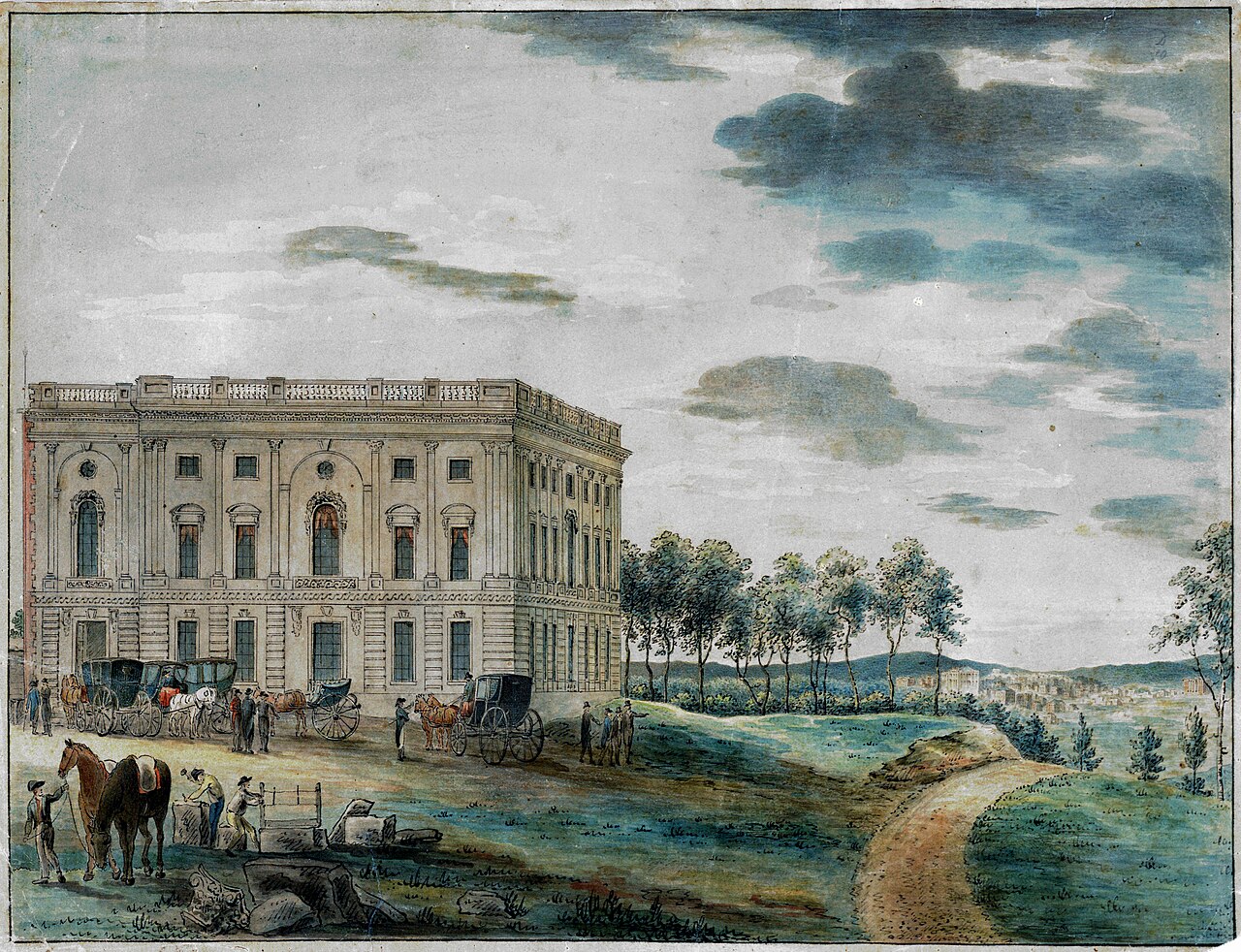
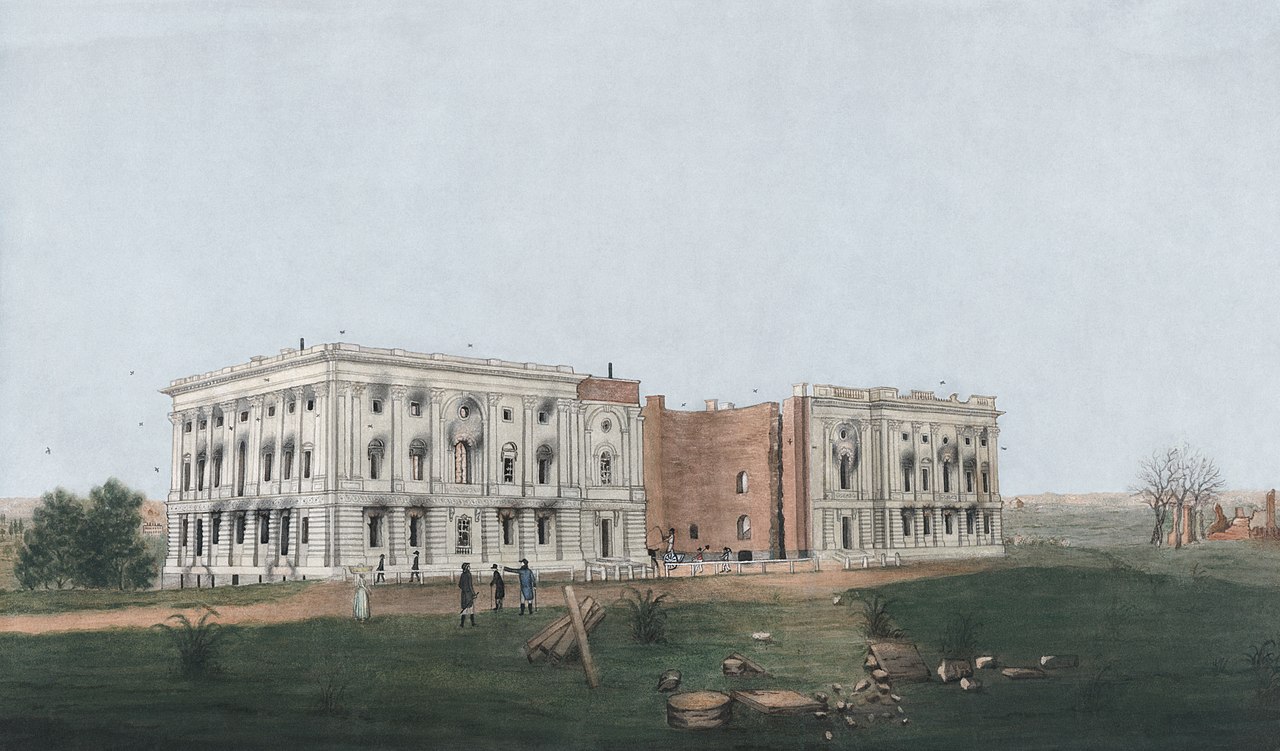
The Senate (north) wing was completed in 1800. The Senate and House shared quarters in the north wing until a temporary wooden pavilion was erected on the future site of the House wing which served for a few years for the Representatives to meet in, until the House of Representatives (south) wing was finally completed in 1811, with a covered wooden temporary walkway connecting the two wings with the Congressional chambers where the future center section with rotunda and dome would eventually be. However, the House of Representatives moved early into their House wing in 1807. Though the Senate wing building was incomplete, the Capitol held its first session of the U.S. Congress with both chambers in session on November 17, 1800. The National Legislature was moved to Washington prematurely, at the urging of President John Adams, in hopes of securing enough Southern votes in the Electoral College to be re-elected for a second term as president.
In March 1803, James Madison appointed Benjamin Henry Latrobe to the position of "Surveyor of Public Buildings", with the principal responsibility of completing construction of the Capitol's south and north wings. Work on the north wing began in November 1806. Although occupied for only six years, it had suffered from falling plaster, rotting floors and a leaking roof. Instead of repairing it, Latrobe demolished, redesigned and rebuilt the interiors within the existing brick and sandstone walls. Notably, Latrobe designed the Supreme Court and Senate chambers. The former was a particular architectural achievement; the size and structure of its vaulted, semi-circular ceiling was then unprecedented in the United States.
(Source: Wikipedia)
(Source: Wikipedia)
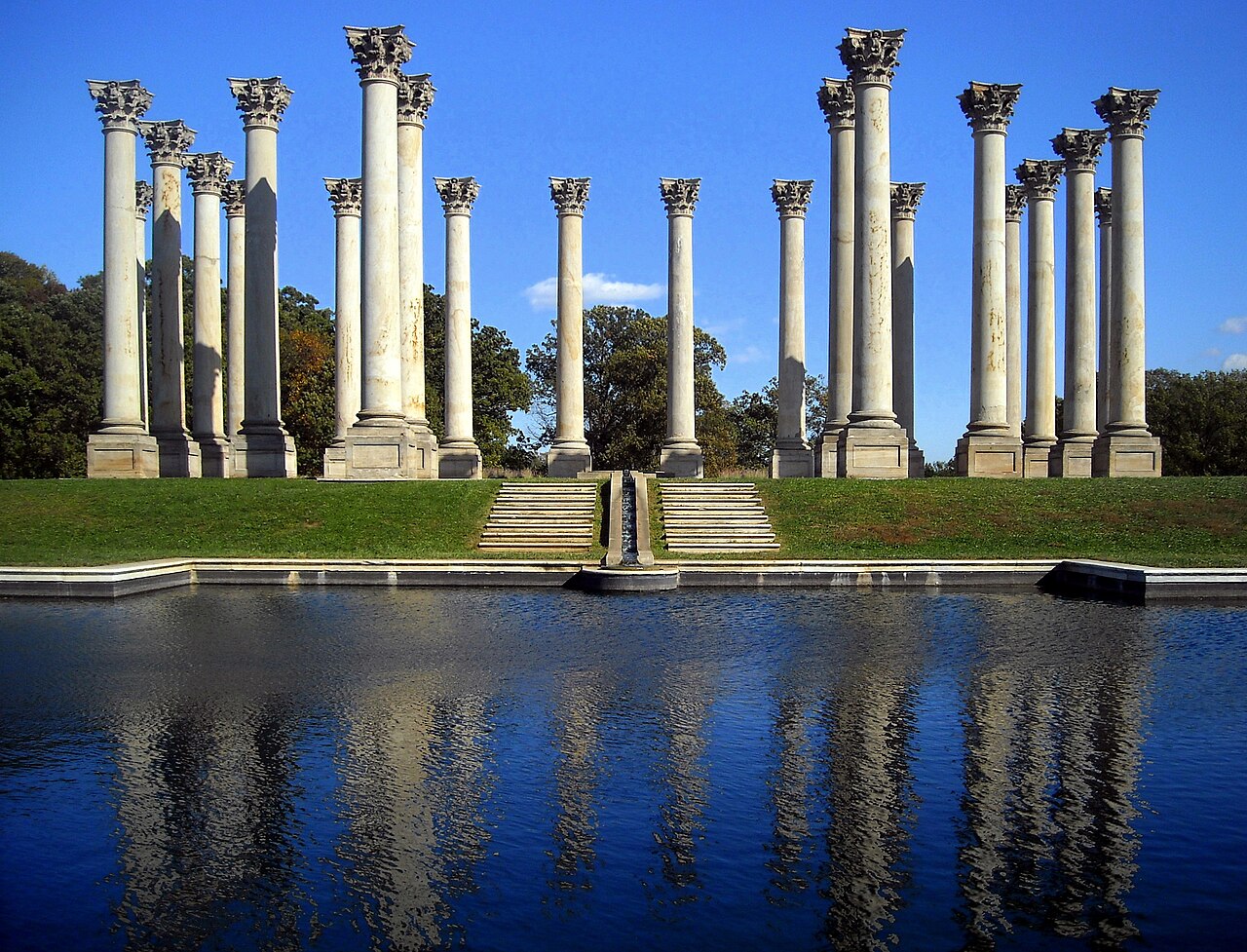
In 1958, the next major expansion to the Capitol started, with a 33.5-foot (10.2 m) extension of the East Portico. In 1960, two years into the project, the dome underwent a restoration. A marble duplicate of the sandstone East Front was built 33.5 feet (10.2 m) from the old Front. In 1962, a connecting extension repurposed what had been an outside wall as an inside wall. In the process, the original sandstone Corinthian columns were removed and replaced with marble. It was not until 1984 that landscape designer Russell Page created a suitable setting for them in a large meadow at the U.S. National Arboretum in northeast Washington as the National Capitol Columns, where they were combined with a reflecting pool into an ensemble that reminds some visitors of the ruins of Persepolis, in Persia.
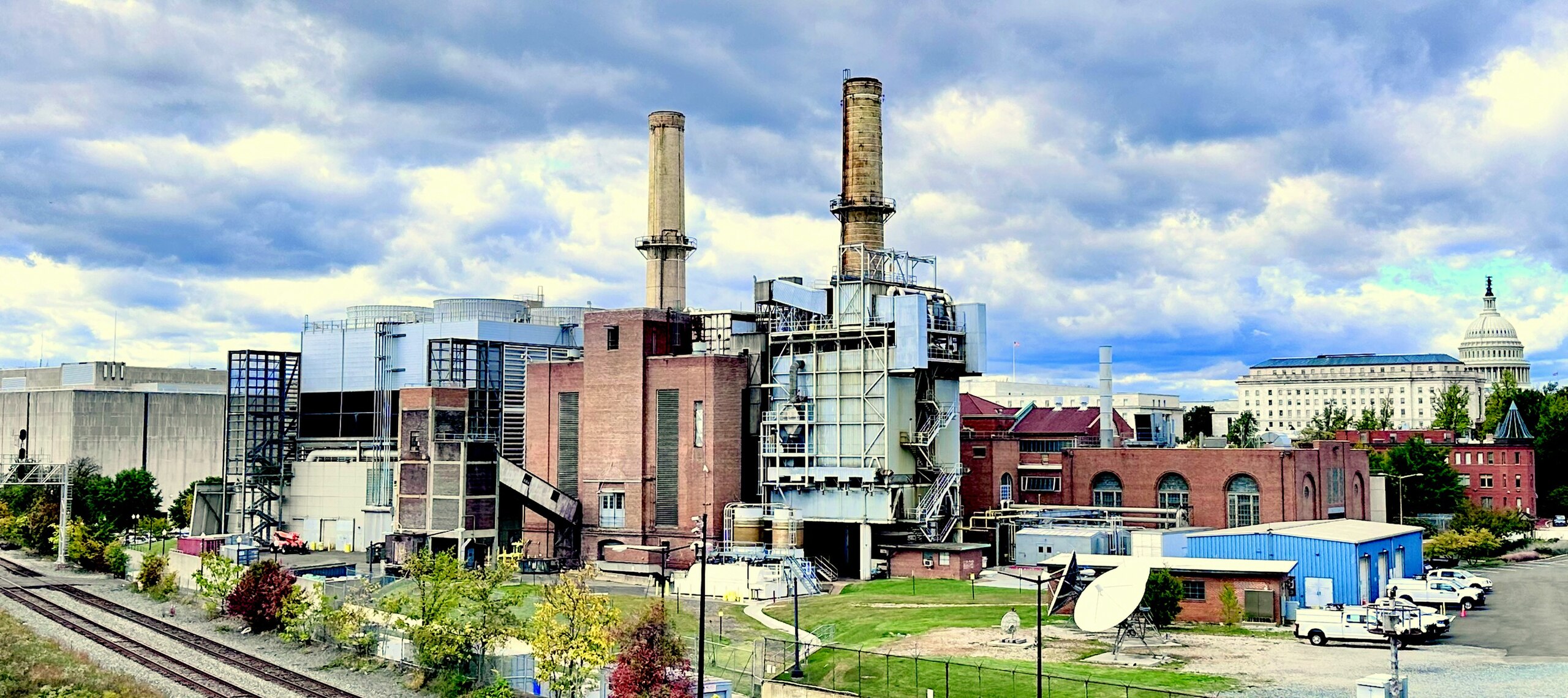
Besides the columns, two hundred tons of the original stone were removed in several hundred blocks, which were first stored on site at the Capitol, and then stored in an unused yard at the Capitol Power Plant until 1975. The same year, the power plant was renovated and expanded in accordance with legislation passed in 1970, and the stones fell to the Commission on the Extension of the United States Capitol. As this body was long defunct, responsibility for the material passed to the House and Senate office building commissions. These commissions then arranged for the National Park Service to store the debris at the back of a NPS maintenance yard in Rock Creek Park
(Source: Wikipedia)
(Source: Wikipedia)
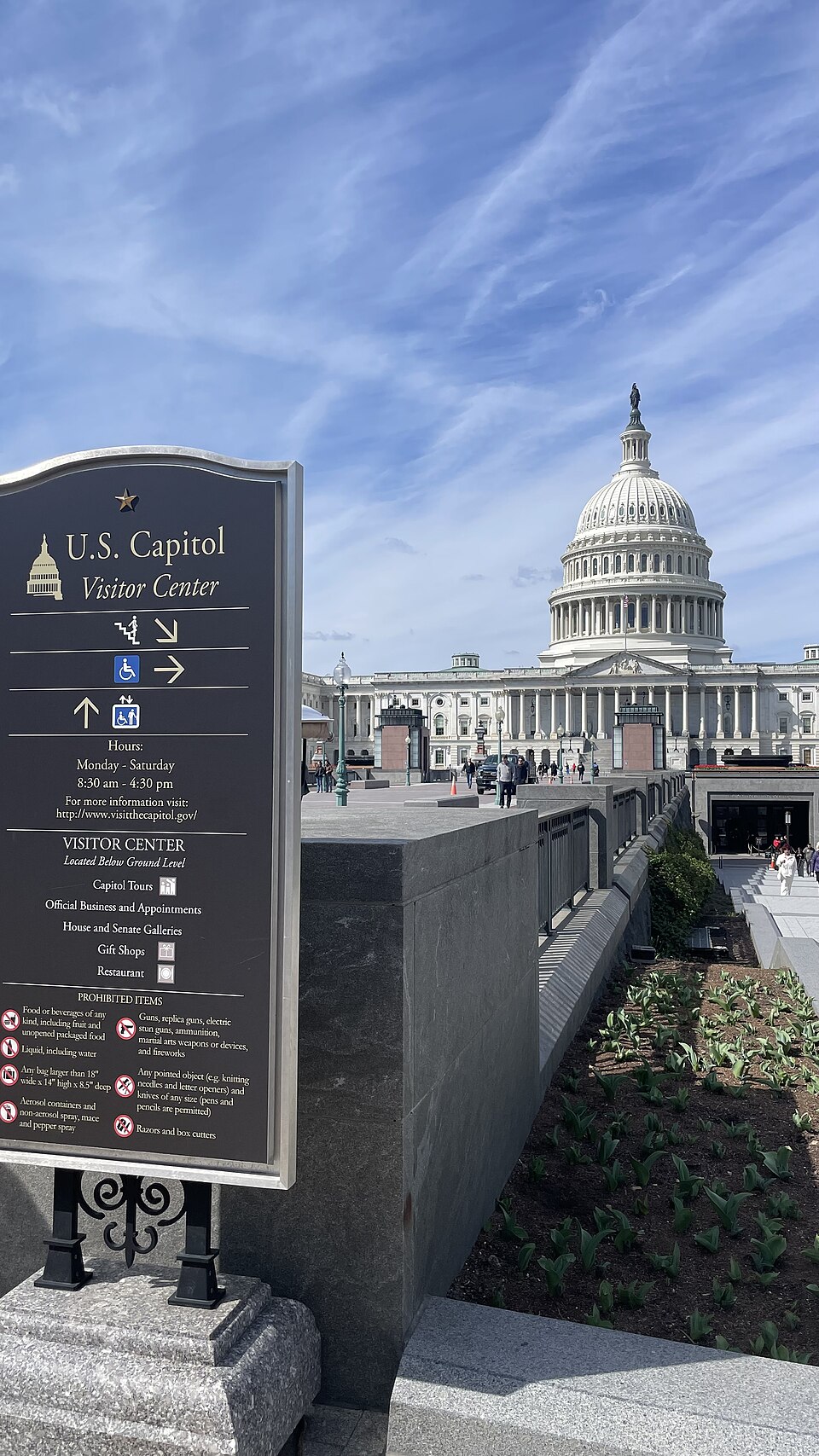
On June 20, 2000, ground was broken for the Capitol Visitor Center, which opened on December 2, 2008. From 2001 through 2008, the East Front of the Capitol (site of most presidential inaugurations until Ronald Reagan began a new tradition in 1981) was the site of construction for this massive underground complex, designed to facilitate a more orderly entrance for visitors to the Capitol. Prior to the center being built, visitors to the Capitol had to line up in the basement of the Cannon House Office Building or the Russell Senate Office Building. The new underground facility provides a grand entrance hall, a visitors theater, room for exhibits, and dining and restroom facilities, in addition to space for building necessities such as a service tunnel.
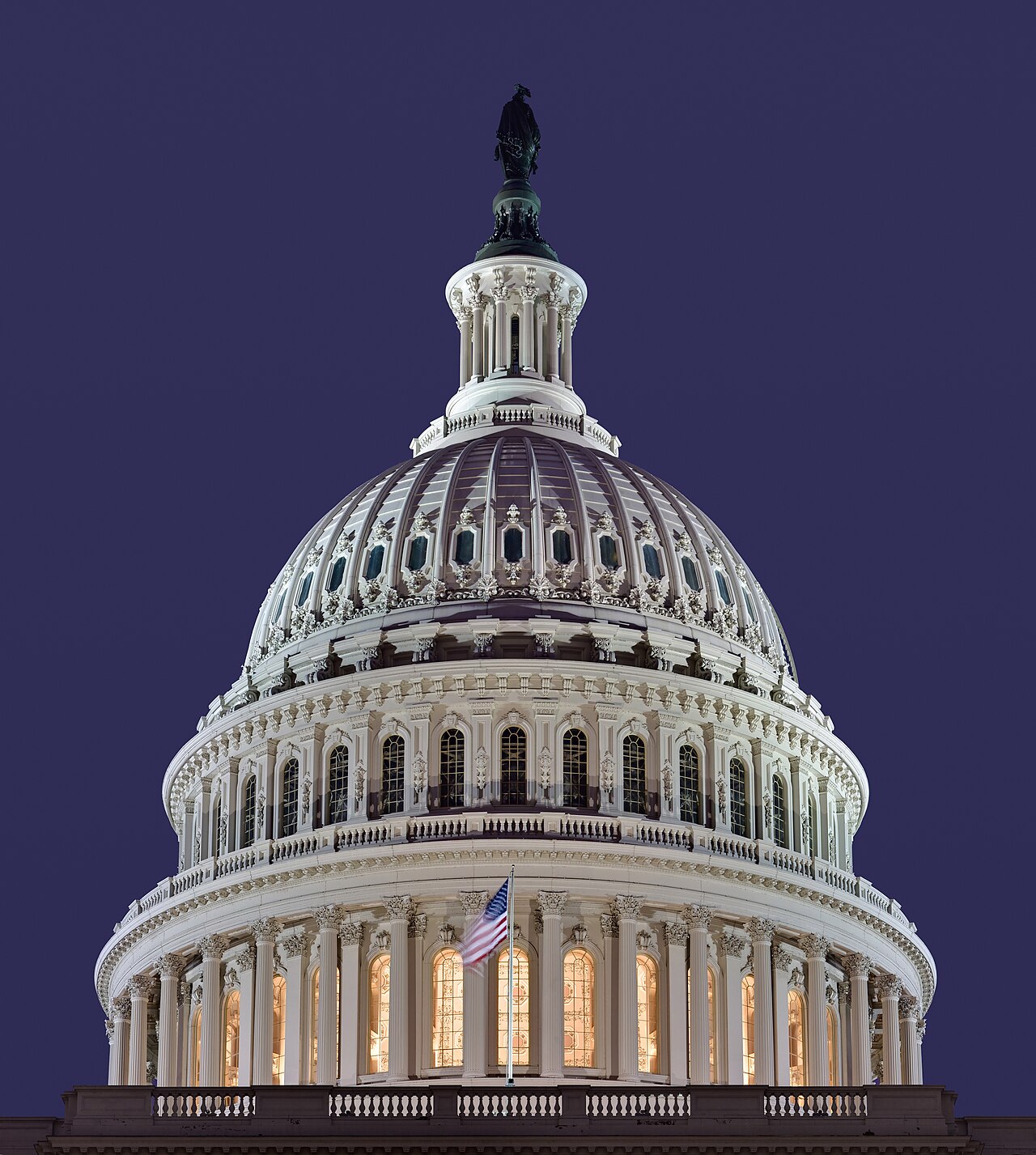
A large-scale Capitol dome restoration project, the first extensive such work since 1959-1960, began in 2014, with completion scheduled before the 2017 presidential inauguration. As of 2012, $20 million in work around the skirt of the dome had been completed, but other deterioration, including at least 1,300 cracks in the brittle iron that have led to rusting and seepage inside, needed to be addressed. Before the August 2012 recess, the Senate Appropriations Committee voted to spend $61 million to repair the exterior of the dome. The House wanted to spend less on government operations, but in late 2013, it was announced that renovations would take place over two years, starting in spring 2014.
(Source: Wikipedia)